Rise in Running-Related Injuries?

The amount of running-associated injuries suffered by American kids aged 6 to 18 elevated 34 % between 1994 and 2007, according to a new study....

Best Milk For You?

Can’t stomach milk? Supermarket shelves are lined with lots of alternatives: soy, rice, hemp, almond, coconut, you name it. But which dairy-free option is right for you? Find out if milks really do your body good…

How Dangerous Is Secondhand Smoke?

Secondhand smoke is a burning health issue, thanks to two new major studies. Find out how to protect yourself and your family from this insidious killer...

Kids Fed Unhealthy Foods Learn to Prefer Them

U.S. preschoolers able to recognize fast-food, cola brand images, study found..

Showing posts with label Eating Healthy. Show all posts

Sunday, January 30, 2011

Best Milk For You?


Can’t stomach milk? Supermarket shelves are lined with lots of alternatives: soy, rice, hemp, almond, coconut, you name it. But which dairy-free option is right for you? Find out if milks really do your body good…

As a kid, milk was part of your daily diet, from morning cereal to midday cookie dunking.

But the older we get, the less we drink – and the more we need. Women, in particular, require milk’s bone-builders: protein, calcium, potassium, and vitamins A and D.

Some women cut out milk because of lactose intolerance or an allergy; others stay away because of worries with weight and cholesterol levels. Or maybe they just never liked the taste.

Whether you choose dairy or go dairy-free, cow’s milk and its alternatives offer a host of flavors and health benefits. Read on to find out which is the best for you:

1. Cow’s Milk
What it is: Americans consume about 583 million cups annually, according to 2008 statistics from the U.S. Department of Agriculture.

No wonder: Milk from cows’ mammary glands is packed with calcium – 1 cup provides about 30% of daily requirements (around 300 mg). Plus, it has protein, says Bethany Thayer, R.D., of the Henry Ford Health System in Detroit, Mich.

What’s good: All cow’s milk is fortified with vitamin D, which the body needs to absorb calcium. (This practice began in the 1940s to reduce the incidence of juvenile rickets, a skeletal disorder in children.) Milk also contains potassium and phosphorous, which helps build strong bones and teeth.

Calorie counting? Choose nonfat milk, which has less than half the calories of whole milk (about 80 calories per cup versus about 150 calories) and slightly more calcium.

Watch out for: The 1% or 2% you see on a milk carton refers to the percentage of fat compared to the other nutrients. So how much is in a glass? Here’s the skinny on fat content:

  • Skim milk – less than 0.5 grams of fat per 8-ounce glass
  • 1% milk – about 2 grams of fat per 8-ounce glass
  • 2% milk – about 5 grams of fat per 8-ounce glass
  • Whole milk – 8 grams of fat per 8-ounce glass

Thursday, January 27, 2011

Kids Fed Unhealthy Foods Learn to Prefer Them

Most preschool children develop a taste for salt, sugar and fat at home, and quickly learn which types of brand-name fast foods and sodas meet these preferences, U.S. researchers say.

In one experiment, the mothers of 67 children, aged 3 to 5, were asked to list their youngsters' taste preferences and listed foods high in sugar, fat and salt. The researchers tested the children and found that the parents' answers were accurate.

In a second experiment, the researchers looked at the association between the taste preferences of 108 preschool children and their emerging awareness of brands of fast food and sugar-sweetened beverages.

The children were shown 36 randomly sorted product cards -- 12 related to each of two popular fast-food chains, six related to each of the two leading cola companies, and six depicting non-related products. All of the children were able to place some of the product cards with the correct companies, which demonstrated that they recognized these brands.

The results "suggest that fast food and soda brand knowledge is linked to the development of a preference for sugar, fat and salt in food," the researchers reported.

Parents need to carefully consider the types of foods they give to young children at home and in restaurants, said study co-author T. Bettina Cornwell, a professor of marketing at the University of Oregon Lundquist College of Business.

"Repeated exposure builds taste preferences," she said in a university news release.

The study findings were released online ahead of publication in an upcoming print issue of the journal Appetite.

Saturday, January 22, 2011

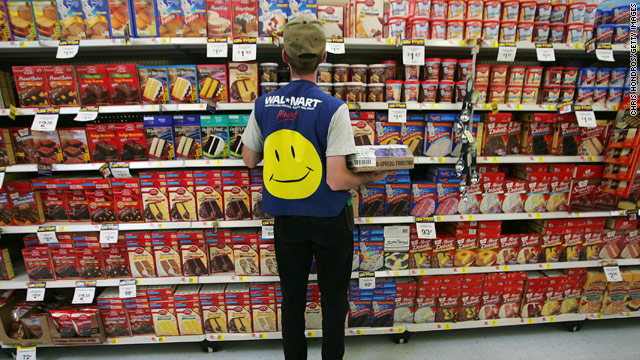
Walmart pledges to make food healthier, more affordable

The largest grocery chain within the country has introduced an extensive five-year plan to make its foods healthier and extra affordable. Walmart, which serves roughly 140 million consumers every week, announced the initiative as a collaboration between its company and first lady Michelle Obama's Let's Move! campaign.

"To more and more of our customers, living better means the ability to walk into our stores and find foods that will help their families live healthier lives," said Leslie Dach, executive vice president of corporate affairs at Walmart. "And importantly, to find these foods at prices they can afford."

Saving money and living better do not always go together when it comes to food. Typically highly processed foods rich in sodium, trans-fats, or added sugars are less expensive, and thus more affordable, than fresh produce. Access to healthy foods is also a difficulty; so-called "food deserts" exist all through the nation, leaving many Individuals with minimal access to healthy fare.

Walmart says its multi-pronged plan addresses both problems. As an example, Walmart has identified "key product categories," or thousands of foods sold by both national manufacturers and Walmart's house brand, that the corporate says could possibly be reformulated to be healthier. The objective is to scale back the sodium content material in meals comparable to deli meats and salad dressing by 25 percent by 2015.

Added sugars in various sauces, fruit drinks, or dairy items shall be reduced by 10 %, while all trans-fats shall be completely removed from packaged meals items. The corporate hopes other meals manufactuers will fall in line and adopt identical standards.

"If the reformulations are adopted by the entire grocery industry, adults in the U.S. will consume approximately 47 million fewer pounds of sodium each year," said Andrea Thomas, a senior vice president of sustainability at Walmart.

Walmart also wants to revise its supply chain to decrease costs on healthy foods and ultimately make them more affordable. The company estimates it could save Americans $1 billion a year on fresh fruit and veggies if its plans are successful.

"This is a step forward," said William K. Hallman, director of the Food Policy Institute at Rutgers University. "Walmart is a category leader so what Walmart does, lots of other companies will follow their lead."

"It's not just the people who shop at Walmart who would benefit from this, it's everybody."

To that end, Walmart's announcement has the potential to make a tremendous impact on America's collective waistline. As recently as last fall, an economics professor at the University of North Carolina Greensboro calculated that for every Supercenter that opened per 100,000 residents, the average BMI of the local population increased 0.24 units and the obesity rate jumped up by 2.3 percentage points.

"In a way, us finding what we did almost accentuates that what they're trying to do could have an impact in the other direction," said Charles Courtemanche, an assistant professor of economics at the University of North Carolina Greenboro.

"Walmart is actually so large...they actually have the power to affect an individual's choices for good or for bad."

Courtemanche's paper will be published in the March issue of the Journal of Urban Economics.

Saturday, January 15, 2011

Fruits, veggies, pomegranate juice help kidney disease


Eating vegetables and fruits and drinking pomegranate juice have positive effects on kidney disease, according to two presentations at the American Society of Nephrology's scientific meeting in Denver Colorado.

One study placed patients with moderately reduced kidney function on a diet high in fruits and vegetables. The researchers hypothesized that the Western diet produces an acidic environment in the body that can worsen as kidney function decreases. After 30 days on the diet, the patients had reduced urine excretion of three markers that signal kidney injury: albumin, transforming growth factor, and N-acetyl-รก-D- glucosaminidase. While the study by Texas A&M College of Medicine and Scott and White Healthcare was small– only 40 patients - the researchers indicated their findings merit larger and longer term studies to determine whether the dietary intervention, which is a simple and inexpensive treatment, produces the same results.

Many people have seen commercials claiming the health and antioxidant benefits of drinking pomegranate juice, which include claims that it can lower cholesterol and blood pressure in patients with diabetes and hypertension.

An Israeli study found that dialysis patients who drank pomegranate juice before dialysis treatments showed reduced inflammation and minimized oxidative stress damage from free radicals, as well as lower hospitalization rates from infections.

The small study included 101 patients who received either pomegranate juice or a placebo three times per week for a year. The researchers say their findings show that pomegranate juice has powerful antioxident properties with benefits for dialysis patients.

African Americans with kidney disease related to high blood pressure and who carry gene variant common in African Americans are 1.5 times more likely to be at risk for progressive kidney disease, researchers from Johns Hopkins University said at the scientific meeting last week.

End stage renal disease occurs when the kidneys fail or almost completely fail to properly remove waste from the body. ESRD is 13.1 times more common in African Americans compared with white subjects, according to the American Society of Nephrology.

The variant MYH9 gene was very common, present in 55 percent of the AASK (African American Study of Kidney Disease and Hypertension) study participants. Its association with progressive kidney disease was independent of age, sex, or treatment for high blood pressure. The same variants are present in many African Americans without kidney disease, however.

Knowing how specific genetic variations can effect outcomes and the progression of kidney disease "and may lead to areas of research to slow or prevent progressive kidney disease," according to Brad Astor, lead researcher from Johns Hopkins Bloomberg School of Public Health in Baltimore, Maryland.

Chronic kidney disease patients who took the cholesterol-lowering drug Vytorin had one-sixth fewer strokes, heart attacks or operations to open blocked arteries than patients who took a placebo. The results of the five-year SHARP (Study of Heart and Renal Protection) trial were presented on Saturday.

The main benefit to patients was the reduction in procedures to open blocked arteries and preventing certain types of strokes, according to lead researcher Dr. Colin Baigent of Oxford University, who presented the findings. In the group of patients treated with Vytorin, 284 had operations to unblock arteries, compared with 352 patients in the placebo group, which was statistically significant. Baigent explained that while the 9,000 patient study was large, it did not include enough patients to show differences in heart attacks and coronary deaths.

A press release from Merck, maker of Vytorin, noted, "This is the first prospective clinical study in patients with chronic kidney disease to demonstrate the benefit of lowering LDL (bad) cholesterol on major vascular events."


Vytorin is a combination of cholesterol fighters ezetimibe (Zetia) and simvastatin (Zocor), that is used for treating high levels of cholesterol in the blood.

Friday, January 14, 2011

STOP Eating Too Much Salt! Your Life May End From It!

How much salt do you put in your food? Have you ever thought about it? Well think about this next fact, salt is one of the most dangerous ingredients in our food. It's no secret that a high-sodium diet raises blood pressure, which in turn can cause heart attacks and strokes. But new studies show that salt is even more dangerous than we thought: Eating too much has been linked to osteoporosis, dementia, cancer, and other serious health problems. It can also add inches to your waist.

Based on this research, the US government is revisiting its sodium guidelines. The new thinking: Adults should consume no more than 1,500 mg of sodium per day (two-thirds of a teaspoon), down from the previous limit of less than 2,300 mg.

This adjustment means that Americans are seriously overdosing on salt, getting 3,436 mg a day—more than double the recommended amount. Where's all that sodium coming from? The greatest concern isn't the flaky stuff you shake on at the table—it's the salt that's already in your food. The biggest problems are processed and packaged foods, which load up on salt for flavor but also for color and texture and to prevent spoilage. About 80% of the sodium in our diets is found in the premade crackers, cookies, cereals, soups, frozen dinners, and pasta sauces we eat at home. And that doesn't even cover fast food and other restaurant meals.

Kicking Your Salt Habit
You can cut back on sodium with a 2-week salt cleanse, which will boost your metabolism and increase your energy as you cut excess sodium from your diet. You'll also feel thinner, because you'll drop water weight from bloating. Losing those pounds and inches will help motivate you to make low-salt eating a way of life as you reset your tastebuds to enjoy low-sodium foods.

Here's how: For 14 days, you'll eat three 300-calorie meals per day, each with less than 300 mg sodium. You'll also drink a 300-calorie Mineral Boost Juice daily, which provides potassium, calcium, and magnesium to help rid your body of excess sodium. Plus, you'll eliminate processed and packaged foods, as well as alcohol.

The good news is that your palate will adapt quickly. Most of us have about 10,000 tastebuds, each one made up of 50 to 150 receptor cells that live for only 1 to 2 weeks and then are replaced by new receptors. So after eating a cleaner diet for 2 weeks, you'll not only begin to taste and enjoy more subtle flavors, you'll also have less of a craving for salt.

The Silent Killer
It's no longer just heart attacks and strokes you need to worry about if you eat too much salt. Evidence now connects sodium to other serious health problems, including:

Cancer
Salted foods are linked to a 15% increase in cancer risk, according to a 2010 Japanese study. In other research, high salt intake has been associated with deaths from stomach cancer. Salty foods irritate the stomach lining, which can cause infection by H. pylori, bacteria that lead to stomach cancer.

Osteoporosis
High-salt diets have been shown to increase calcium loss, which weakens bone and leads, over time, to osteoporosis. A 2-year study of postmenopausal women connected a decrease in hip bone density to sodium intake.

Diabetes
Eating lots of salt may promote insulin resistance. Diabetes already puts you at greater risk of hypertension and heart disease— and a high salt intake only raises these risks.

Dementia
Hypertension may also affect your brain. Results of the 2010 Women's Health Initiative Memory Study, which took MRI scans of 1,400 women age 65 or older, revealed that those with high blood pressure had more abnormal brain lesions 8 years later. Other research shows that people with hypertension are up to 600% more likely to develop stroke-related dementia.

Sleep Apnea
High blood pressure is a villain here too. It is a vicious cycle—sleep apnea causes sleep deprivation, which can increase blood pressure.

Kidney Disease
Hypertension eventually damages blood vessels throughout your body, including the kidneys. The damage can be gradual: Symptoms may not occur until kidney function is less than 10% of normal.

Thursday, January 13, 2011

Taco Bell Aiming at Weight Loss?

When you picture yourself constantly eating a taco-craving Chihuahua, Fourth Meal and double-decker tacos everyday, what do you see? You probably see yourself being fat but according to Taco Bell, this great meal good help fight fat! What???

In an ad campaign much like Subway's Jared Fogle spots, Taco Bell has introduced its own weight-loss character.

According to the company, Christine Dougherty, 27, ate items from Taco Bell's lower-calorie "Fresco menu" five to eight times a week and dropped 54 pounds.

Despite welcoming Taco Bell's low calorie options, some nutritional experts say that the Taco Bell ads could be misleading.

In the commercial, Dougherty shows off her slender body in a form-fitting dress and later a purple bikini while showing photos of her once-chubbier self.

"I lost about two pounds a month over a period of two years by reducing my daily calories and replacing my typical fast-food lunch or dinner with something from the Taco Bell Drive-Thru Diet," Dougherty says in the commercial. "I just chose smarter options."

These options did not include cheesy gorditas or half-pound burritos.

Dougherty caught the attention of the company after writing to Taco Bell about her dieting success story.
Starting in 2007, the Pensacola, Florida, resident cut 500 calories from her diet and limited herself to 1,250 a day, according to the ads. She replaced her regular Taco Bell meals with the chain's Fresco items: seven tacos and burritos that range from 150 to 340 calories.

The Fresco fare is not cooked differently. The same burritos and tacos on the regular menu are stripped of shredded cheese and sauce; the items instead contain a tomato, onion and cilantro salsa. This substitution shaves off 20 to 100 calories, according to Taco Bell.

Although the company calls its marketing effort the Drive-Thru Diet, among several flashing disclaimers is, "this is not a weight-loss program."

"The disclaimers at the bottom, we say this is part of a lower calorie effort. We say you should exercise," said Tom Wagner, Taco Bell's vice president of consumer insights and lead project manager of the Drive-Thru Diet. "We don't in any way try to market this as a miracle solution to lose weight."

Ruth Carey, a registered dietitian and spokeswoman for the Fresco Menu for Taco Bell, said, "If people eat items from the Drive-Thru item menu as part of an overall varied diet, it can be very healthy."

Carey is not Dougherty's dietitian but learned about her eating patterns. When Dougherty began dieting, she continued eating out because she disliked cooking at home, Carey said.

Carey said she would have preferred Dougherty exercised in addition to her calorie restriction, but her diet showed that "you can really lose weight by making small changes. ... Just reducing calories by 100 to 200 every day on a consistent basis also makes a difference in overall weight loss over a period of a year or two."
Robert Keith, a professor of nutrition and food science at Auburn University, said it appears unlikely that Taco Bell itself transformed Dougherty.

"Tons of various diets -- grapefruit diets, banana diets -- they all work for a while, because you don't eat many calories," he said. "If you eat fewer calories, it doesn't matter whether you eat Taco Bell, Subway, Atkins or the Dean Ornish diet. There's a lot of different ways. The idea is, you eat less calories. [The Taco Bell ads] don't dwell on the fact she didn't eat many calories. The bottom line is, she lost weight because she didn't eat a whole lot."

Joan Salge Blake, a registered dietitian and a spokeswoman for the American Dietetic Association, said that "there's nothing innately magical about Taco Bell" and that eating fewer calories "can be done at many eateries, in your own home. There's many ways to do this."

Dr. Melina Jampolis, Diet and Fitness expert and a physician nutrition specialist, said the Dougherty commercials leave the impression that tacos contributed to weight loss.

"They're giving far too much credit to the Taco Bell product," she said. "Whenever you reduce by 500 calories and make reasonable, healthy choices, you're going to lose weight."

Even though this may be true, Taco Bell could profit alot from this from naive customers who do not pay attention to detail. Leave your opinion in the comments section! Do you think Taco Bell is leaving false impressions?

Twitter Delicious Facebook Digg Stumbleupon Favorites More