Rise in Running-Related Injuries?

The amount of running-associated injuries suffered by American kids aged 6 to 18 elevated 34 % between 1994 and 2007, according to a new study....

Best Milk For You?

Can’t stomach milk? Supermarket shelves are lined with lots of alternatives: soy, rice, hemp, almond, coconut, you name it. But which dairy-free option is right for you? Find out if milks really do your body good…

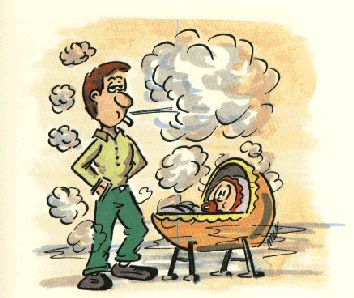
How Dangerous Is Secondhand Smoke?

Secondhand smoke is a burning health issue, thanks to two new major studies. Find out how to protect yourself and your family from this insidious killer...

Kids Fed Unhealthy Foods Learn to Prefer Them

U.S. preschoolers able to recognize fast-food, cola brand images, study found..

Showing posts with label Health. Show all posts

Sunday, March 20, 2011

Low Paying Jobs Costly to Health


If you're a sort of one who simply get burdened, you need to be very cautious in choosing a job. Having a job with low salary have a worse influence for mental well being compared to being unemployed.

This was revealed in a study by a crew from The Australian National College, Canberra, Australia. Of their survey, it was revealed that individuals who skilled the transition from being unemployed to having a job with an unsatisfying salary, admits to be extra stressed after they'd a job.

Besides a good and satisfying wage, employee’s welfare is measured from their stress on the job, career paths, versatile work hours, and good communication.

“People who solely see black and white, which is the unemployed and employees are likely to feel that all jobs are created equal, but it is not so,” said Joseph Grzywacz, neighborhood and family medicine specialists who carried out this analysis, in keeping with LiveSciense.

The research was based mostly on a survey of greater than 7,000 people in Australia for seven years, starting in 2001. The respondents had been also requested to fill out questionnaires about signs of depression or anxiety, in addition to optimistic feelings such as calmness and happiness.

Usually, people who have jobs feel extra joyful than unemployed people. However when noticed deeper, like age, gender, training level, well being standing, the unemployed are higher than people who work however with poor welfare.

Folks from the group additionally showed a decrease of psychological well being from time to time.

This should be a concern for the company administration as a result of stress, fatigue and anger as a results of dissatisfaction could make a person’s emotions uncontrolled.

There are a number of things that is prompt by the research group to enhance the welfare of employees, amongst different is by making them feel secure in working by giving workers with contract certainty.

“Corporations ought to have the ability to make flexible rules in order that employees do not really feel compelled to choose between work and family, for instance, if a baby is sick,” stated Grzywacz.

Thursday, March 17, 2011

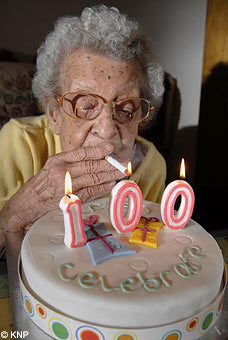
Tips To Reach 100 Years Old


Almost everybody certainly hopes to have a long life. Nonetheless, they actually is not going to reach their hopes if they don’t give enough effort in reaching it. But is it actually possible for us to live to the age of 100 years old? Nicely, according to a study performed in Denmark, individuals can reside for 100 years or 20 years longer than the common human life today.

“What prevents us from reaching it's bad habits,” said Walter Bortz II, MD, Professor of medicine from Stanford University.

To have the ability to reach the age of one hundred, we must concentrate on positive actions and habits, like eating fruits and vegetables that adds five years to out age, exercising five instances per week which adds 2 to four years, and avoiding stress which can add 6 years in our age.

In line with Yahoo! Shine, listed here are some other secretes of longevity that may help you attain a hundred years of age

1. Doing hobbies
One essential factor in getting a protracted life is by being happy. And by doing a pastime, you'll be able to increase your longevity as much as 2 years. A passion could cut back stress and makes your coronary heart happy.

2. Making the most of free time
Having a bit spare time can enhance the danger of coronary heart disease eight times larger. Therefore, take advantage of your free time as good as possible to do the stuff you love. This can also add one to 2 years of longevity.

3. Sleeping
Sleeping additionally has advantages for longevity. Getting used to sleeping 7-eight hours day-after-day can improve your broken physique cells in order that you can also dwell two years longer.

4. Sex
Having sex with a associate could make you reside three to five years longer because sex can relieve stress and create feelings of delight caused by the oxytocin hormone. By doing this activity, you also burn 200 calories.

5. Doing yoga
Yoga is well known to be very useful to human health. Recent research had found that yoga can enhance alertness, and helps your diet.

6. Drinking inexperienced tea
Amongst different types of tea, inexperienced tea has most advantages for human body. This tea is wealthy in antioxidants that helps the body struggle every kind of diseases.

7. Train your brain
In response to a research conducted by The Mind Research Network in Mexico, playing games like Tetris for half-hour a day will help the mind work extra optimally.

Wednesday, March 16, 2011

How much radiation is bad?


Well being experts urged governments in the Asia Pacific to watch radioactivity levels after Japan's quake-broken nuclear power plant exploded and despatched radiation into the air.

Radiation is measured using the unit sievert, which quantifies the amount of radiation absorbed by human tissues.

One sievert is 1,000 millisieverts (mSv). One millisievert is 1,000 microsieverts.

Beneath are some details in regards to the health risks posed by higher radiation levels:

* Japan's Chief Cupboard Secretary Yukio Edano had, at one level, mentioned radiation ranges near the stricken plant on the northeast coast reached as high as four hundred millisieverts (mSv) an hour. That determine would be would be 20 times the annual exposure for some nuclear-industry staff and uranium miners.

* People are uncovered to pure radiation of 2-3 mSv a year.

* In a CT scan, the organ being studied typically receives a radiation dose of 15 mSv in an grownup to 30 mSv in a new child infant.

A typical chest X-ray involves exposure of about 0.02 mSv, whereas a dental one may be 0.01 mSv.

* Publicity to 100 mSv a yr is the bottom stage at which any increase in most cancers risk is clearly evident. A cumulative 1,000 mSv (1 sievert) would probably cause a fatal most cancers many years later in 5 out of every one hundred persons uncovered to it.

* There may be documented proof associating an accumulated dose of ninety mSv from two or three CT scans with an increased risk of cancer. The evidence within reason convincing for adults and very convincing for children.

* Giant doses of radiation or acute radiation publicity destroys the central nervous system, crimson and white blood cells, which compromises the immune system, leaving the victim unable to combat off infections.

For instance, a single one sievert (1,000 mSv) dose causes radiation illness akin to nausea, vomiting, hemorrhaging, but not death. A single dose of 5 sieverts would kill about half of these exposed to it inside a month.

* Exposure to 350 mSv was the criterion for relocating folks after the Chernobyl accident, in accordance with the World Nuclear Association.

*"Very acute radiation, like that which occurred in Chernobyl and to the Japanese employees on the nuclear energy station, is unlikely for the inhabitants," mentioned Lam Ching-wan, a chemical pathologist at the college of Hong Kong.

Sunday, January 30, 2011

A Rise in Running-Related Injuries?


The amount of running-associated injuries suffered by American kids aged 6 to 18 elevated 34 % between 1994 and 2007, according to a new study.

Throughout that period, there were an estimated 225,344 such injuries treated in U.S. hospital emergency departments, a average of more than 16,000 per year.

Nearly all of the working-associated injuries were sprains and strains to the lower extremities. Falls accounted for one-third of the injuries and greater than half of the injuries occurred at school, stated the researchers at the Center for Injury Research and Policy at Nationwide Children's Hospital in Columbus, Ohio.

Children aged 6 to 14 were more likely to be injured as a reult of a fall and while running at school, while teens aged 15 to 18 were more likely to be injured while running on the street or at a sports activities and recreation facility.

"Encouraging children and adolescents to run for exercise is a great way to ensure that they remain physically active," Lara McKenzie, principle investigator at the center, said in a hospital news release. "However, the findings from our study show that formal, evidence-based and age-specific guidelines are needed for pediatric runners so that parents, coaches and physical education teachers can teach children the proper way to run in order to reduce the risk of injury."

Best Milk For You?


Can’t stomach milk? Supermarket shelves are lined with lots of alternatives: soy, rice, hemp, almond, coconut, you name it. But which dairy-free option is right for you? Find out if milks really do your body good…

As a kid, milk was part of your daily diet, from morning cereal to midday cookie dunking.

But the older we get, the less we drink – and the more we need. Women, in particular, require milk’s bone-builders: protein, calcium, potassium, and vitamins A and D.

Some women cut out milk because of lactose intolerance or an allergy; others stay away because of worries with weight and cholesterol levels. Or maybe they just never liked the taste.

Whether you choose dairy or go dairy-free, cow’s milk and its alternatives offer a host of flavors and health benefits. Read on to find out which is the best for you:

1. Cow’s Milk
What it is: Americans consume about 583 million cups annually, according to 2008 statistics from the U.S. Department of Agriculture.

No wonder: Milk from cows’ mammary glands is packed with calcium – 1 cup provides about 30% of daily requirements (around 300 mg). Plus, it has protein, says Bethany Thayer, R.D., of the Henry Ford Health System in Detroit, Mich.

What’s good: All cow’s milk is fortified with vitamin D, which the body needs to absorb calcium. (This practice began in the 1940s to reduce the incidence of juvenile rickets, a skeletal disorder in children.) Milk also contains potassium and phosphorous, which helps build strong bones and teeth.

Calorie counting? Choose nonfat milk, which has less than half the calories of whole milk (about 80 calories per cup versus about 150 calories) and slightly more calcium.

Watch out for: The 1% or 2% you see on a milk carton refers to the percentage of fat compared to the other nutrients. So how much is in a glass? Here’s the skinny on fat content:

  • Skim milk – less than 0.5 grams of fat per 8-ounce glass
  • 1% milk – about 2 grams of fat per 8-ounce glass
  • 2% milk – about 5 grams of fat per 8-ounce glass
  • Whole milk – 8 grams of fat per 8-ounce glass

Saturday, January 29, 2011

How Dangerous Is Secondhand Smoke?

Secondhand smoke is a burning health issue, thanks to two new major studies. Find out how to protect yourself and your family from this insidious killer...

Everyone knows smoking is dangerous – 1 in 10 deaths worldwide is from a smoking-related disease, according to the World Health Organization.

But exposure to tobacco fumes kills 600,000 nonsmokers a year worldwide, including 165,000 children, according to a December 2010 WHO study. That’s about 1 out of every 100 deaths worldwide, through smoke-related illnesses such as heart disease, lower respiratory infections, asthma and lung cancer.

And the fumes are harder to avoid than you think: They can seep through apartment ventilation systems and cling to baby car seats, where they’re easily ingested.

The U.S. Surgeon General’s office issued its own smoking report in December, reinforcing the dangers of “passive,” or secondhand, exposure.

“Chemicals in tobacco smoke reach lungs quickly every time you inhale, causing damage immediately,” said U.S. Surgeon General Regina M. Benjamin, M.D.

“Inhaling even the smallest amount can also damage DNA, which can lead to cancer.”

About 3,400 lung cancer deaths a year are attributable to secondhand smoke, the report estimates.

Read on to learn more about secondhand smoking risks and how to limit exposure:

Why Other People’s Smoke Can Harm You
Tobacco smoke contains 7,000 chemicals, including hundreds that are toxic and at least 70 known to cause cancer, according to the Surgeon General’s report.

Passive exposure also causes heart attacks, says cardiologist Matthew Sorrentino, M.D., FAAC, an associate professor of medicine at the University of Chicago.

“The toxins in cigarette smoke enter the body and damage the coronary arteries that bring blood to the heart,” he says. “Cholesterol builds up on the arteries, and they become blocked, which can lead to a heart attack.”

Thursday, January 27, 2011

Kids Fed Unhealthy Foods Learn to Prefer Them

Most preschool children develop a taste for salt, sugar and fat at home, and quickly learn which types of brand-name fast foods and sodas meet these preferences, U.S. researchers say.

In one experiment, the mothers of 67 children, aged 3 to 5, were asked to list their youngsters' taste preferences and listed foods high in sugar, fat and salt. The researchers tested the children and found that the parents' answers were accurate.

In a second experiment, the researchers looked at the association between the taste preferences of 108 preschool children and their emerging awareness of brands of fast food and sugar-sweetened beverages.

The children were shown 36 randomly sorted product cards -- 12 related to each of two popular fast-food chains, six related to each of the two leading cola companies, and six depicting non-related products. All of the children were able to place some of the product cards with the correct companies, which demonstrated that they recognized these brands.

The results "suggest that fast food and soda brand knowledge is linked to the development of a preference for sugar, fat and salt in food," the researchers reported.

Parents need to carefully consider the types of foods they give to young children at home and in restaurants, said study co-author T. Bettina Cornwell, a professor of marketing at the University of Oregon Lundquist College of Business.

"Repeated exposure builds taste preferences," she said in a university news release.

The study findings were released online ahead of publication in an upcoming print issue of the journal Appetite.

Saturday, January 22, 2011

Snow Shoveling Injuries Affect Old and Young, Expert Warns

Snow shoveling is a dangerous chore that causes an average of nearly a hundred deaths and 11,500 emergency department visits each year within the United States, according to a new study.

And while a lot of the problems occur among adults, children under 19 experience more than 1,750 shoveling-related accidents each year, the investigators found.

The analysis of data from 1990 to 2006 found that the most common shoveling-associated accidents had been tender tissue damage (fifty five %), cuts (16 %) and broken bones (7 %).

Essentially the most regularly injured areas of the body have been the lower back (34 %), the arms and hands (16 %) and the head (15%), the research authors noted. Common causes of injuries have been acute musculoskeletal exertion (54 %), slips or falls (20 %) and being struck by a snow shovel (15 %t).

Heart problems accounted for only 7 % of all shoveling-associated cases but were responsible for more than half of the hospitalizations and all of the 1,647 deaths during the 17-year study period, according to the report published in the January issue of the American Journal of Emergency Medicine.

Folks fifty five and older were more than four times more likely than younger people to experience coronary heart problems while shoveling snow. Among these over fifty five, men have been twice as likely as ladies to undergo coronary heart issues, said the researchers at the Center for Injury Research and Policy of The Research Institute at Nationwide Children's Hospital in Columbus, Ohio.

"The cardiovascular demands of snow shoveling are increased by the freezing temperatures that typically accompany snowfall," study senior author Dr. Gary Smith, director of the Center for Injury Research and Policy, said in a hospital news release.

"Not only is the heart's workload increased due to shoveling snow, but cold temperatures also add to the chances of a heart attack in at-risk individuals. We recommend talking to your doctor before you shovel snow, especially if you do not exercise regularly, have a medical condition or are in a high-risk group," Smith added.

Alternatives to shoveling include using a snow blower, hiring someone else to do it, or using salts, de-icing sprays or heated sidewalk mats.

And before sending the children out to clear the snow, explain to them that shovels are tools and are not meant for horseplay. Shoveling accidents suffered by kids and teens often result from being struck by a snow shovel, with two-thirds of those being head injuries, the doctor pointed out.

"Shoveling snow can be a great outdoor activity for kids; however, it is important for parents to teach children the correct way to shovel snow and remind them that shovels are not toys," said Smith, who is also a professor of pediatrics at the Ohio State University College of Medicine.

Friday, January 21, 2011

Apology May Leave You Feeling Unsatisfied, Study Finds

Apologies are often less satisfying than people anticipate them to be, a new Dutch study indicates.

The research involved individuals who were using a computer and given 10 euros (about $13.40 in U.S. currency) to either keep or give to a companion they communicated with online. The money was tripled so that the accomplice actually acquired 30 euros. The companion then had to decide how much to return, but only gave back 5 euros.

Some individuals received an apology for this meager amount, whereas others had been informed to think about they'd received an apology.

The participants who imagined an apology valued it greater than those that actually acquired an apology.

The findings, printed in the journal Psychological Science, suggests that individuals do a poor job of predicting what is actually needed to resolve conflicts. They  want an apology and conider it worthwhile but the actual apology is much less satisfying than expected, mentioned researcher David De Cremer of Erasmus University in the Netherlands.

"I think an apology is a first step in the reconciliation process ... but you need to show that you will do something else," he said in a journal news release.

The results suggest that an apology  might be more effective at convincing outside observers that the wrongdoer feels remorse rather than making the slighted person feel better, the researchers said.

Thursday, January 20, 2011

Pets May Pass Illnesses to Owners


You may want to think twice before snuggling in bed at night with Fido or Fluffy.

According to a report published in the February publication of the general public health journal Emerging Infectious Diseases, seemingly health pets can carry parasites, bacteria or viruses that cause mild to life-threatening illness in people.

Of the 250 zoonotic diseases -- infections transmitted between animals and people -- more than one hundred are derived from home pets, said veterinarian Dr. Bruno Chomel, report co-author and professor of zoonoses at University of California School of Veterinary Medicine at Davis.

Despite the fact that disease transmission is low compared to how many people sleep with their pets -- greater than half of all U.S. pet owners -- Chomel said the risks are nonetheless there.

"Having a pet in the bed is not a good idea," he said.

In one case a sixty nine-year-old man, whose dog slept underneath the covers with him and licked his hip replacement wound, came down with meningitis. Another incident concerned a 9-year old boy who obtained plague, a potential lethal bacterial infection, from sleeping with his flea-infested cat.

Other infections transmitted to individuals after sleeping with their cat or dog, kissing them or being licked by the pet includes: hookworm, ringworm, roundworm, cat scratch illness and deadly infections, the report said.

While people need to be aware that it's possible to get sick from a pet, the health benefits of ownership far outweigh the risks, said Dr. Peter Rabinowitz of the Yale School of Medicine and co-author of the text book Human-Animal Medicine: Clinical Approaches to Zoonoses, Toxicants and Other Shared Health Risks. Research has shown that besides offering psychological support and friendship, pets help to lower blood pressure, increase physical activity, reduce stress and lift owners' spirits, among other things.

However, he said, people with weakened immune systems are at greater risk for getting an infection from an animal. These include the elderly, children younger than 5 years, people with HIV/AIDS and cancer patients.

Owners can stay healthy by practicing good hygiene habits, which include washing hands with soap and hot water after dealing with pets, particularly puppies, kittens or any aged cat or dog with diarrhea. Those "high-risk pets," he mentioned, are more likely to harbor an an infection that could possibly be passed to people. Additionally, immediately wash any area licked by a pet.

To prevent and catch diseases early, keep animals free of fleas and ticks, routinely de-worm them and have them commonly examined by a veterinarian, the report advises. The authors additionally discourage homeowners from kissing their cats or dogs and sharing a bed with them.

Because most zoonotic diseases are below-recognized or not reportable to well being authorities, Rabinowitz mentioned nobody actually knows what number of circumstances occur every year. Nevertheless, he suspects several million infections are passed between pets and other people yearly in the United States, ranging from self-limited pores and skin circumstances to life-threatening systemic illnesses.

"We think there are probably a lot of infections that happen and nobody really figures out that it came from the pet," said Rabinowitz, program director of the Yale Human Animal Medicine Project.

In recent years, an initiative called "One Health" -- whose supporters include the American Medical Association, the American Nurses Association and the American Veterinary Medical Association -- has pushed for better communication and collaboration between doctors and veterinarians. Approximately 60 percent of all human pathogens are zoonotic, according to the U.S. Centers for Disease Control and Prevention.

Just this week the president of the American Medical Association spoke at a veterinary conference in Orlando, Fla., about the importance of unifying the health professions.

"It's not only animals giving infections to people, it looks like people can infect animals, too," said Rabinowitz, citing a case where a domestic shorthaired cat in Iowa contracted the H1N1 virus from its owner. "It's a two-way street."

Wednesday, January 19, 2011

Repealing Health Care Reform

Republicans have put the wheels in motion to try to repeal President Obama's health care reform law.

What's behind the push for repeal?


Simple: It's a campaign promise that House Republicans are trying to honor.

During the runup to the midterm elections, Republicans campaigned heavily on repealing and replacing the law. They cited the "will of the people" -- noting that voters, especially members of the Tea Party movement, overwhelmingly rejected the Democrats' policies.

After their historic gains in the midterms, Republicans now control the House and hold a large number of seats in the Senate, and they are living up to that promise. The GOP has been saying that the law as currently written will hamper prospects for long-term economic growth while doing little to slow spiraling medical costs.

House Speaker John Boehner, who used to refer to the bill as a "jobs killer," now says that repealing the "job-crushing" health care law is critical to boosting small business job creation and growing the economy, reflecting sensitivities in the wake of the mass shooting this month in Tucson, Arizona, that critically injured a Democratic colleague, Rep. Gabrielle Giffords.

What are the chances of repeal?

Nearly nil.

The measure is expected to pass the House, where Republicans have the numbers, but has little chance of clearing the Democratic-controlled Senate. Obama will veto it if it gets to his desk, and there are not enough votes in either chamber to override his veto.

Most Republicans acknowledge the virtual impossibility of an outright repeal but have indicated that there will be attempts to defund portions of the measure or eliminate specific provisions in the months ahead.

But the nonpartisan Congressional Budget Office analysis indicates that Republicans may have trouble moving ahead with defunding the law. The measure includes $106 billion in new spending authorizations that Congress will eventually need to appropriate, according to CBO Director Doug Elmendorf. But $86 billion of those authorizations cover politically sensitive programs that were in existence before the passage of health care reform.

What do Americans think?

Polls suggest that Americans are not so happy with the law.

According to a Opinion Research Corp. survey released Tuesday, when asked whether they would rather see Congress vote to repeal all of the provisions or keep them in place, 50 percent of all Americans favored repeal -- even though only one in six dislikes everything in the bill. Four in 10 oppose such a move.

A Quinnipiac University national poll also released Tuesday offered similar results. According to the survey, Americans by a 48 percent to 43 percent margin want Congress to repeal health care reform.

A GOP defection
A top Republican recently said that the law should not be repealed. And he has the credentials to back it up.

Former Senate Majority Leader Bill Frist, a surgeon who retired from Congress in 2007, said Tuesday at the Bipartisan Policy Center -- an organization he chairs with former Democratic Senate Minority Leader Tom Daschle, among others -- that the law should stand.

"It is not the bill that (Republicans) would have written," he said. "It is not the bill that I would have drafted. But it is the law of the land, and it is the platform, the fundamental platform, upon which all future efforts to make that system better, for that patient, for that family, will be based."

He added: "(The bill) has many strong elements. And those elements, whatever happens, need to be preserved, need to be cuddled, need to be snuggled, need to be promoted and need to be implemented. But how do you do it? How do you do a lot of what is in this law?"

Other doctors-turned-lawmakers, such as Sen. Tom Coburn of Oklahoma, are staunchly opposed to the law.

What do Democrats say?

Top Democrats, meanwhile, argued that the public is behind the law, which they say is already helping millions of Americans, and lashed out at the GOP's efforts.

The Department of Health and Human Services released an analysis warning that almost 130 million non-elderly Americans with pre-existing conditions would be at risk of losing their insurance without the guarantees provided by the legislation.

"The new law is already helping to free Americans from the fear that an insurer will drop, limit or cap their coverage when they need it most," Health and Human Services Secretary Kathleen Sebelius said. "Americans living with pre-existing conditions are being freed from discrimination in order to get the health coverage they need."

Democrats have pointed out, among other things, that an increased number of Americans are covered by the law.

A Drug that Could Help Traumas

A drug used to stem bleeding for heavy menstrual durations may do the same for hemorrhaging patients after a traumatic injury, in accordance with a new study. Tranexamic acid, which works by keeping blood clots intact, might prevent countless deaths in events where extensive blood loss occurs, according to the study.

"There is now very clear evidence that this drug saves lives in bleeding trauma patients," said Ian Roberts, lead study author and professor of public health at the London School of Hygiene and Tropical Medicine. "Patients in car crashes, patients who are shot or stabbed. Or it could be a soldier in places like Afghanistan and Iraq."

Utilizing tranexamic acid to deal with patients within the wake of traumatic injury inflicting large bleeding could save about 2,000 lives annually within the United States alone, said Roberts - even more worldwide. The issue, he says, is that few doctors are aware of evidence suggesting the treatment works.

"This treatment could save between seventy and one hundred thousand lives a year if doctors knew about it," said Roberts. "A lot of people will find it a really strange idea that a treatment shown to be effective is not being used."

Tranexamic acid belongs to a group of drugs called antifibrinolytics, medicine that inhibit blood clots from dissolving. When a patient is bleeding profusely, there are two processes within the body occurring simultaneously, said Roberts - clot formation and clot breakdown. While the body struggles to form clots, and thereby stanch bleeding, there are competing enzymes produced in the body that break down clots.

"We don't want [to break down clots] when we're bleeding to death," said Roberts. "We want all the clotting we can get."

This most recent research about tranexamic acid, printed by the Cochrane Library, is based totally on knowledge from a 2010 research referred to as CRASH-2. The study concerned 20,211 trauma patients in a number of countries who had, for example, been shot, stabbed or involved in a automobile crash - or who had been at  some other risk for significant bleeding. Patients who received tranexamic acid were 15% less prone to bleed to death - and fewer more likely to die, period - than those who received placebo.

Roberts was the chief investigator for the CRASH-2 trial which was funded, partially, by one of the makers of tranexamic acid, Pfizer.

In prescribing info by Pfizer for Cyklokapron, a brand of tranexamic acid used to prevent bleeding in hemophiliacs following tooth extraction, dangers in animals (given much higher doses of tranexamic acid than humans typically receive) include retinal abnormalities.

"No retinal changes have been reported or noted in eye examinations in patients treated with tranexamic acid for weeks to months in clinical trials," according to prescribing information issued by Pfizer. "However, visual abnormalities, often poorly characterized, represent the most frequently reported postmarketing adverse reaction in Sweden."

And prescribing data for Lysteda, the drug used to treat heavy menstrual bleeding, describes reports of deep vein thrombosis and visual disturbances.

"We found no evidence of adverse effects" during the CRASH-2 trial, said Roberts.

Researchers plan to check tranexamic acid as a potential treatment for excessive bleeding after childbirth and to quell bleeding after traumatic brain injury.

Family, Friends Aids Recovery

A thumbs up. Two opened eyes. A smile. These easy signs of recognition from U.S. Rep. Gabrielle Giffords kept hope alive for her restoration from a bullet to the head January 8. And later this week, her mother and father have told family members and friends in an e-mail, she'll be moved to Houston, Texas, to start an aggressive rehab with a staff of medical specialists.

Giffords opened her eyes for the first time January 12, and one among her doctors, Dr. Michael Lemole, stated the "unexpected familiarity" of having close friends visit might have helped her progress. She still has a long journey ahead in recovery, however the support of family, friends and onlookers across the country is evident.

Astronaut Mark Kelly, Giffords' husband, has been by the congresswoman's side since the shooting. He told ABC's Diane Sawyer he can be there holding Giffords' hand as many days as it takes, "whatever it takes."

Patients, their loved ones and health care professionals have stated that having loved ones present and actively encouraging recovery could make a profound difference.

Shawna Shearer believes it's true, as she mentioned in her iReport. Her husband Andrew, 31, broke both knees and femurs and suffered a number of small strokes in a head-on automobile crash. For two months, he remained unconscious, but he was never alone. His spouse, mom and father took turns staying with him; his father slept in the waiting room many nights.

"I tried to stay as positive as I could," Shawna Shearer, 28, said. "I remember when Andrew opened his eyes, and it was amazing to us."

Though there are not any onerous data to prove that having household and friends around can help a mind trauma sufferer regain consciousness or brain function, it is true that familiar voices have special entry to the mind, says Dr. Lee Schwamm, affiliate professor of neurology at at Harvard Medical School and vice chairman of neurology at the Massachusetts General Hospital.

It is as if there's a small police officer inside your mind deciding which signals are allowed to go through and which aren't, Schwamm said. And the officer gives privileged access to familiar voices, even with significant harm to the mind and lowered consciousness.

Shawna Shearer hoped for signs that she and the remainder of the family have been getting through to Andrew. However when he first awoke, it was difficult to tell what, if anything, he could understand what others mentioned, Shawna said. Then, he began following members of the family together with his eyes.By August, he could nod his head for "yes."

Andrew Shearer has informed that he doesn't remember anything that occurred between the day of the accident and around August or September, but appreciates the "tremendous help" that the mere presence of his members of the family brought.

Randie Alf, 28, experienced that, too. In December, she had an aortic dissection and fell unconscious for two days. Her huge family, spread out throughout the United States, banded together to visit, pray and post updates on Facebook.

"When I 'awoke' I wasn't sure when it was and I was still not making too much sense, but I knew where I was and who was with me, my mom and dad and my cousin and my aunts and my friends. And day by day I got stronger in both mind and body," Alf wrote in her iReport.

"I had such a wide array of people thinking about me. I definitely believe that those people are a lot of the reason I got better so quickly," she said.

Alf stayed in the hospital for two weeks, mostly within the ICU. She is staying with her dad and mom during her recovery. Her younger sister, some cousins and many of her friends are also close by.

Kimberly Glassman, chief nursing officer for NYU Langone Medical Heart, has witnessed many ocassions of unconscious patients waking up amid the support of households, and believes they've an necessary function to play in recovery.

"When we have been able to speak to patients who have been in that state and woken up, it's very common for them to say that they heard people talking to them, they could feel people touching them," she said.

It is equally useful for the families to feel as though they are doing something useful and meaningful for his or her cherished one within the ICU, Glassman said. Being at the bedside of the patient might not only transfer familiar signals of touch and sound, but also means a lot to the family members.

Andrew Shearer continues to be recovering, currently in in-patient rehabilitation. From the strokes, he has problems with mobility, and a lower pace of cognitive processing, but no difficulty speaking. His wife and children are looking into moving somewhere where he can move around easier than in their condo, as he mostly uses a wheelchair.

"If you've got people at your side encouraging you, you have such an advantage over isolated and withdrawn patients who have to do that journey alone," Schwamm said.

Kelly is already prompting his wife to have expectations for a speedy turnaround: "I told her she's going to be walking in two weeks," he told Sawyer. "It's good to have a goal, and she's a very goal-oriented person."

There are perhaps more refined ways in which family support can also facilitate a recovery: A vested interest on the a part of the patient's family and pals can help the hospital workers really feel extra connected to the patient also. At Massachusetts Normal Hospital, families of admitted intensive care unit patients are invited to make posters with pictures so that hospital staff members have a better sense of who they are. If the family believes in the patient, the staff may be a bit of more hopeful than they could have otherwise.

"When families give up on the patient's recovery, I think the health care team may do the same," Schwamm said.

Alf and Andrew Shearer each suggest that family and friends of somebody in the hospital try to be there for the patient as much as possible. Even if you cannot be there physically, phone calls and cards do help, Alf said.

In fact, nurses such as Glassman will put the cellphone up to an unconscious affected person's ear if a family member can't be there in person. They'll read every card sent to these patients who are unable to read them themselves.

"I would encourage families to be hopeful, to be present, and to really keep hope alive in their heart," Schwamm said. "We do see patients like Ms. Giffords, and we see them often."

Tuesday, January 18, 2011

FDA To Give Alzheimer's Test to Living Patients?


One of the many frustrations of Alzheimer’s disease is the difficulty in pinpointing just who has it. According to printed research, as many as one in five individuals informed they have Alzheimer’s are mislabeled. A definitive analysis can be made only after dying, by an autopsy that reveals a particular buildup - referred to as amyloid plaques - in the patient’s brain. This week, however, the FDA will think about a brand new diagnostic test that could possibly identify those plaques through PET scans - a kind of mind scan - on living patients.

In a small research run by Avid Radiopharmaceuticals and made public Tuesday within the Journal of the American Medical Association, PET scans identified the telltale plaques in 97 % of patients who truly had them, as determined by a subsequent autopsy. The 35 patients in this part of the reasearch had been terminally ill, and agreed to each a mind scan and an autopsy.

The researchers also carried out PET scans on presumably healthy individuals to attempt to ensure that the test might tell the difference. It could. Of seventy four young and healthy folks tested, none had scans indicating Alzheimer’s.

Before performing a PET scan, a physician or technician injects the affected person with a radioactive dye that may be detected by the imaging equipment. The actual dye used in this test was developed by Avid and is known as Florbetapir F 18. Chief Executive Officer Dr. Daniel Skovronsky says Florbetapir F 18 binds tightly to the amyloid proteins - making them visible to the scanner - but doesn’t bind to different tissue.
According to Skovronsky, analysis of Alzheimer’s still is dependent upon a clinician who can evaluate a patients total condition, however he says the test with Florbetapir could possibly be especially helpful as a device to rule out Alzheimer’s. In that scenario, a patient who reveals symptoms of dementia could be given a PET scan; a unfavourable result would push her doctor to consider other conditions.

A second paper in JAMA suggests that a simple, low-priced blood check can inform whether a person is at risk for cognitive decline, which is a precursor to Alzheimer’s.

Throughout a span of 10 years, researchers checked the blood of 997 elderly folks in Memphis, Tennessee and Pittsburgh, Pennsylvania, testing for 2 types of proteins which can be associated with Alzheimer’s. They re-tested every individual at 1-year, 3-year, 5-year, 8-year and 10-year intervals. Patients with lower levels have been significantly more likely to suffer cognitive decline over time.

Researchers also discovered that patients with more “cognitive reserve” while healthy, are much less prone to decline. “Cognitive reserve” is measured in various ways - for instance, by years of education attended, or performance on intelligence tests. The researchers say it may be that people with greater intelligence or more education are capable of higher compensate for functions lost to early cognitive decline.

Smoking Scenes Triggers Smokers to Smoke


According to new research, seeing a character in a movie light up a cigarette triggers a smoker's brains to plan identical motions.

Within the research, functional MRI was used to observe mind activity in 17 smokers and 17 nonsmokers as they watched film scenes that featured smoking. Once they noticed those scenes, the smoker's brains showed elevated activity in areas involved in motion of the hand they use to smoke.

The researchers, led by senior investigator Todd Heatherton of Dartmouth Faculty, published their findings within the Jan. 19 issue of the Journal of Neuroscience.

"Our findings support prior studies that show smokers who exit a movie that had images of smoking are more likely to crave a cigarette, compared with ones who watched a movie without them," Heatherton said in a news release from the Society for Neuroscience.

"More work is needed to show whether brain activity in response to movie smoking predicts relapse for a smoker trying to quit," he added


The researchers noted that smokers are often advised to keep away from other smokers and to remove smoking paraphernalia from their properties, however they could not have thought to avoid seeing a movie that featured scenes of smoking.

It's long been known that visual cues can cause drug cravings, said Scott Huettel, a Duke University expert in the neuroscience of decision making, who was not involved in the study.

"This finding builds upon the growing body of evidence that addiction may be reinforced not just by drugs themselves but by images and other experiences associated with those drugs," Huettel said in the news release.

Monday, January 17, 2011

Excessive Gaming Linked to Depression and Terrible Grades


When it comes to taking part in video games, it appears moderation is essential to a kid's psychological health. A brand new study revealed by the American Academy of Pediatrics finds extreme gaming might result in melancholy, anxiety, and poor grades in school.

Researchers in the U.S. and overseas checked out more than 3,000 elementary and center-school kids in Singapore and located that nearly 9% of them had been considered pathological or "addicted" to gaming - comparable percentages were found in different countries.

Over a two-year interval about 84% of those who began out as excessive avid gamers remained so, indicating that this may not simply be a phase that youngsters go through. Boys have been extra likely to present signs of excessive gaming. Overall those considered"pathological" avid gamers displayed increased ranges of despair and different mental health issues than their peers who played fewer video games. The researchers additionally discovered that college students who did cease their excessive gaming diminished their ranges of despair, anxiousness and social phobia.

There is debate within the medical community as as to whether pathological or "addictive" video gaming must be listed as a psychological disorder within the American Diagnostic and Statistic Manual of Mental Problems - a guide used by the American Psychiatric Association in diagnosing mental disorders.

To gauge the extent of pathological gaming, the research authors requested college students questions similar to the type used to diagnose playing habit such as: were students turning into extra preoccupied with video games, did they lie about the period of time spent enjoying, had their schoolwork suffered, and if taking part in helped them escape from problems or unhealthy feelings.

A teen was labeled pathological or "addicted" if the follow precipitated problems in his or her life.

"And we define that as precise functioning - their faculty, social, household, occupational, psychological functioning. To be considered pathological, gamers must be damaging a number of areas of their lives," explains research creator Douglas Gentile, Ph.D., developmental psychologist at Iowa State College in Ames.

Pathological avid gamers had been playing an average of greater than 31 hours a week compared with their much less extreme peers who played about 19 hours a week.

Gentile and the opposite researchers additionally looked at potential danger factors for becoming pathological gamers.

"Kids who were more impulsive have been more prone to become addicted; they had a tougher time managing their impulse control. In the event that they have been socially awkward then they had been more more likely to be addicted and in the event that they spent a greater amount of time then the average children playing video games," explained Gentile.

The Leisure Software program Affiliation disagreed with the findings. " "There simply is no concrete proof that computer and video video games trigger hurt," an announcement from the group said. "The truth is, a wide physique of analysis has proven the many methods games are getting used to improve our lives by education, well being and enterprise applications."

Dr. Don Shifrin, spokesperson with the American Academy of Pediatrics, referred to Gentile's research as important. "It permits us to take a harder take a look at how avid gamers play and whether or not there's stability in the lives of our kids and teens," he mentioned

The AAP recommends that elementary college age kids have interaction in no more than one hour of display screen time a day, and excessive schoolers no more than two.

Saturday, January 15, 2011

Fruits, veggies, pomegranate juice help kidney disease


Eating vegetables and fruits and drinking pomegranate juice have positive effects on kidney disease, according to two presentations at the American Society of Nephrology's scientific meeting in Denver Colorado.

One study placed patients with moderately reduced kidney function on a diet high in fruits and vegetables. The researchers hypothesized that the Western diet produces an acidic environment in the body that can worsen as kidney function decreases. After 30 days on the diet, the patients had reduced urine excretion of three markers that signal kidney injury: albumin, transforming growth factor, and N-acetyl-รก-D- glucosaminidase. While the study by Texas A&M College of Medicine and Scott and White Healthcare was small– only 40 patients - the researchers indicated their findings merit larger and longer term studies to determine whether the dietary intervention, which is a simple and inexpensive treatment, produces the same results.

Many people have seen commercials claiming the health and antioxidant benefits of drinking pomegranate juice, which include claims that it can lower cholesterol and blood pressure in patients with diabetes and hypertension.

An Israeli study found that dialysis patients who drank pomegranate juice before dialysis treatments showed reduced inflammation and minimized oxidative stress damage from free radicals, as well as lower hospitalization rates from infections.

The small study included 101 patients who received either pomegranate juice or a placebo three times per week for a year. The researchers say their findings show that pomegranate juice has powerful antioxident properties with benefits for dialysis patients.

African Americans with kidney disease related to high blood pressure and who carry gene variant common in African Americans are 1.5 times more likely to be at risk for progressive kidney disease, researchers from Johns Hopkins University said at the scientific meeting last week.

End stage renal disease occurs when the kidneys fail or almost completely fail to properly remove waste from the body. ESRD is 13.1 times more common in African Americans compared with white subjects, according to the American Society of Nephrology.

The variant MYH9 gene was very common, present in 55 percent of the AASK (African American Study of Kidney Disease and Hypertension) study participants. Its association with progressive kidney disease was independent of age, sex, or treatment for high blood pressure. The same variants are present in many African Americans without kidney disease, however.

Knowing how specific genetic variations can effect outcomes and the progression of kidney disease "and may lead to areas of research to slow or prevent progressive kidney disease," according to Brad Astor, lead researcher from Johns Hopkins Bloomberg School of Public Health in Baltimore, Maryland.

Chronic kidney disease patients who took the cholesterol-lowering drug Vytorin had one-sixth fewer strokes, heart attacks or operations to open blocked arteries than patients who took a placebo. The results of the five-year SHARP (Study of Heart and Renal Protection) trial were presented on Saturday.

The main benefit to patients was the reduction in procedures to open blocked arteries and preventing certain types of strokes, according to lead researcher Dr. Colin Baigent of Oxford University, who presented the findings. In the group of patients treated with Vytorin, 284 had operations to unblock arteries, compared with 352 patients in the placebo group, which was statistically significant. Baigent explained that while the 9,000 patient study was large, it did not include enough patients to show differences in heart attacks and coronary deaths.

A press release from Merck, maker of Vytorin, noted, "This is the first prospective clinical study in patients with chronic kidney disease to demonstrate the benefit of lowering LDL (bad) cholesterol on major vascular events."


Vytorin is a combination of cholesterol fighters ezetimibe (Zetia) and simvastatin (Zocor), that is used for treating high levels of cholesterol in the blood.

Friday, January 14, 2011

BEWARE: Body Sprays For Teen Boys Are Making People Sick


Have you experienced a boy in your family or yourself worrying constantly about how you smell? There are few things more worrisome to an insecure teenager than how he or she smells. So it shouldn't be very surprising that new deodorant body spray introductions have increased 43 percent this year over last, according to market researcher Mintel. It also shouldn't come as a surprise that marketers are very savvy about marketing these products to teenagers, who have a healthy amount of disposable income and haven't yet learned the art of moderation. Yet, while marketers are counting their dollars, adults are holding their noses.

"When my oldest son used it, I could smell it all day long," says Carmen Staicer, a mother of six from Virginia. "I could smell it in the car after I drove him to school." The "it" she's referring to is Axe Body Spray, which is the best-selling deodorant spray on the market and the bane of households--and schools--nationwide. When she worked in a local school cafeteria, Staicer says, "Every person who worked there made mention of how smelly Axe was, and how overpowering it was to have a line of 30 to 45 hot, sweaty boys come from PE class with a fresh application of Axe." It doesn't help that teenage boys have biology working against them: Boys reportedly have noses that are 200 to 1,000 times less sensitive than a woman's, plus oily skin, a hallmark of teenage years, holds scents much longer than dry skin.

Whether a teenager is addicted to Axe or any of the dozens of other deodorant sprays on the market, getting him to back away from the spray isn't a bad idea. These fragranced body sprays contain synthetic fragrances that are in reality chemical cocktails made up of hundreds of chemicals, such as hormone-disrupting phthalates and synthetic musks, and the Environmental Working Group's (EWG's) Skin Deep Cosmetic Safety Database consistently rates Axe, Old Spice, and other commercial body sprays as moderate or high hazards. A recent analysis of popular perfumes, including Axe, Old Spice, and fragrances from popular chain stores, found that many contained chemicals linked to sperm damage.

"Phthalates are anti-androgenic, or anti-testosterone," says Maida Galvez, MD, MPH, assistant professor in the department of community and preventive medicine and the department of pediatrics at Mount Sinai School of Medicine, referring to the fact that the chemicals lower the body's testosterone levels and boost estrogen levels. And, she notes, research has found that teenagers have higher phthalate levels in their bodies than adults do.

It's easy to imagine that these chemicals could have unknown long-term effects on the teens that use them, considering that they're in the midst of the hormonal upheaval that is puberty. A 2009 study from EWG found that teenagers may be particularly susceptible to hormone-disrupting chemicals like phthalates because of the way the chemicals influence the rapidly developing reproductive system. Animal studies have found that male rats exposed to phthalates during puberty had more testicular problems because of the way they absorbed and metabolized the chemicals. And of course girls--who are the ones that desire nice-smelling boys most of all (if you believe the advertisements for these products)--are undergoing changes in their mammary glands, and exposures to hormone-disrupting chemicals during this phase of their lives could trigger biological changes that may result in breast cancer later in life, according to a recent report from the Breast Cancer Fund.

Staicer's sons have opted to put down the body sprays for the sake of their mom and their asthmatic siblings. "They know I hate it," she says. But if you think getting your teenage boys to do the same might be a Herculean feat, take heart, says Judy Shils, founder and executive director of Teens Turning Green, a California-based advocacy group that was started by teenagers to educate other teenagers about the hazards of chemicals in personal-care products. "Boys typically roll their eyes when you talk to them about chemical dangers in personal-care products," Shils says, "but they do start caring once they start hearing from their girlfriends about how overpowering the scents can be."

Boys' concerns run even deeper, she adds, when you present them with the science. One of Shils' responsibilities as director is visiting high-school science classes and educating students about the body burden of chemicals in consumer products. Often, she has kids bring in one of their favorite products and then consults the EWG Skin Deep database to find its hazard rating. "One thing I noticed was that guys, more than girls, were completely blown away by this stuff," she says. "They'd look at the rating for a shaving cream and get angry and ask, 'Why are we being told this is OK to use?'" After her visits, she says, she'd often get calls from parents asking what safer products are out there. "When they hear information like this from a third party, they can take it home and affect change in their family," she says. "It's empowering." And probably way more so than a body spray that claims to boost your self-confidence.

It's not always easy for parents to convince their teenage boys to ditch odiferous body sprays, but there are ways you can subtly steer your child in a different direction:

  • Use the Internet.
    As Shils says, third-party sources usually have more of an impact than an parent's nagging pleas to axe the Axe. Let your teenage boy play around on EWG's Skin Deep Cosmetic Safety Database and look up products he currently uses.
  • Contact a Specialist
    Or, at least, a local chapter of Teens Turning Green in your area, who can come talk to your child's school. If one doesn't exist, students can start a chapter with a simple toolkit available from the organization's website.
  • Consider a body spray ban at school.
    If your child isn't addicted to sprays but suffers when other students wear them, you have the basis for complaint. "Kids should know that perfumes can be overwhelming to those who are either asthmatic or sensitive to scent," says Carmen Staicer, who recalls one instance where a student used a fragrance in class and gave the teacher an asthma attack. School districts in some northeastern states and Minnesota have already launched public-education campaigns about the allergenic nature of perfumes and body sprays, in the hopes of getting kids to cut down on overusing them. Shils says that school principals are usually the best point of entry if you're trying to enact a ban on perfumes in schools.
  • Use the power of the purse.
    If all else fails, restock your teenager's medicine cabinet with less-smelly deodorants that he might like (most body sprays are used as fragrances, but they're technically considered deodorants) and refuse to buy body sprays. Teens Turning Green often employs college guys to try out new products to see which ones work, and Shils says that guys who formerly used Axe have given props to Liken Plant from a company called Earth Science and deodorants from Weleda and Aubrey Organics. But, she says, you usually have to remind guys that these less-toxic deodorants need to be reapplied. "They don't always work as beautifully as the ones riddled with chemicals," she says, "but we tell guys, you're lessening the toxic load on your body, and those around you will appreciate it."

STOP Eating Too Much Salt! Your Life May End From It!

How much salt do you put in your food? Have you ever thought about it? Well think about this next fact, salt is one of the most dangerous ingredients in our food. It's no secret that a high-sodium diet raises blood pressure, which in turn can cause heart attacks and strokes. But new studies show that salt is even more dangerous than we thought: Eating too much has been linked to osteoporosis, dementia, cancer, and other serious health problems. It can also add inches to your waist.

Based on this research, the US government is revisiting its sodium guidelines. The new thinking: Adults should consume no more than 1,500 mg of sodium per day (two-thirds of a teaspoon), down from the previous limit of less than 2,300 mg.

This adjustment means that Americans are seriously overdosing on salt, getting 3,436 mg a day—more than double the recommended amount. Where's all that sodium coming from? The greatest concern isn't the flaky stuff you shake on at the table—it's the salt that's already in your food. The biggest problems are processed and packaged foods, which load up on salt for flavor but also for color and texture and to prevent spoilage. About 80% of the sodium in our diets is found in the premade crackers, cookies, cereals, soups, frozen dinners, and pasta sauces we eat at home. And that doesn't even cover fast food and other restaurant meals.

Kicking Your Salt Habit
You can cut back on sodium with a 2-week salt cleanse, which will boost your metabolism and increase your energy as you cut excess sodium from your diet. You'll also feel thinner, because you'll drop water weight from bloating. Losing those pounds and inches will help motivate you to make low-salt eating a way of life as you reset your tastebuds to enjoy low-sodium foods.

Here's how: For 14 days, you'll eat three 300-calorie meals per day, each with less than 300 mg sodium. You'll also drink a 300-calorie Mineral Boost Juice daily, which provides potassium, calcium, and magnesium to help rid your body of excess sodium. Plus, you'll eliminate processed and packaged foods, as well as alcohol.

The good news is that your palate will adapt quickly. Most of us have about 10,000 tastebuds, each one made up of 50 to 150 receptor cells that live for only 1 to 2 weeks and then are replaced by new receptors. So after eating a cleaner diet for 2 weeks, you'll not only begin to taste and enjoy more subtle flavors, you'll also have less of a craving for salt.

The Silent Killer
It's no longer just heart attacks and strokes you need to worry about if you eat too much salt. Evidence now connects sodium to other serious health problems, including:

Cancer
Salted foods are linked to a 15% increase in cancer risk, according to a 2010 Japanese study. In other research, high salt intake has been associated with deaths from stomach cancer. Salty foods irritate the stomach lining, which can cause infection by H. pylori, bacteria that lead to stomach cancer.

Osteoporosis
High-salt diets have been shown to increase calcium loss, which weakens bone and leads, over time, to osteoporosis. A 2-year study of postmenopausal women connected a decrease in hip bone density to sodium intake.

Diabetes
Eating lots of salt may promote insulin resistance. Diabetes already puts you at greater risk of hypertension and heart disease— and a high salt intake only raises these risks.

Dementia
Hypertension may also affect your brain. Results of the 2010 Women's Health Initiative Memory Study, which took MRI scans of 1,400 women age 65 or older, revealed that those with high blood pressure had more abnormal brain lesions 8 years later. Other research shows that people with hypertension are up to 600% more likely to develop stroke-related dementia.

Sleep Apnea
High blood pressure is a villain here too. It is a vicious cycle—sleep apnea causes sleep deprivation, which can increase blood pressure.

Kidney Disease
Hypertension eventually damages blood vessels throughout your body, including the kidneys. The damage can be gradual: Symptoms may not occur until kidney function is less than 10% of normal.

Thursday, January 13, 2011

Taco Bell Aiming at Weight Loss?

When you picture yourself constantly eating a taco-craving Chihuahua, Fourth Meal and double-decker tacos everyday, what do you see? You probably see yourself being fat but according to Taco Bell, this great meal good help fight fat! What???

In an ad campaign much like Subway's Jared Fogle spots, Taco Bell has introduced its own weight-loss character.

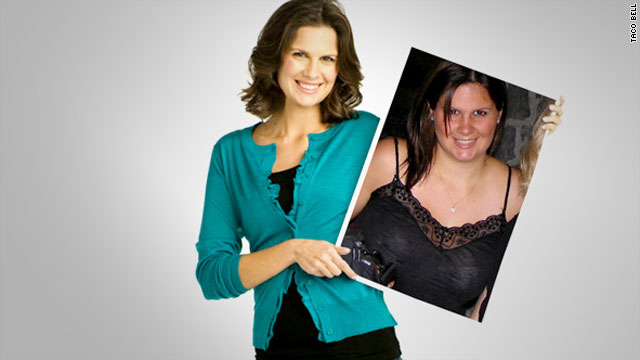
According to the company, Christine Dougherty, 27, ate items from Taco Bell's lower-calorie "Fresco menu" five to eight times a week and dropped 54 pounds.

Despite welcoming Taco Bell's low calorie options, some nutritional experts say that the Taco Bell ads could be misleading.

In the commercial, Dougherty shows off her slender body in a form-fitting dress and later a purple bikini while showing photos of her once-chubbier self.

"I lost about two pounds a month over a period of two years by reducing my daily calories and replacing my typical fast-food lunch or dinner with something from the Taco Bell Drive-Thru Diet," Dougherty says in the commercial. "I just chose smarter options."

These options did not include cheesy gorditas or half-pound burritos.

Dougherty caught the attention of the company after writing to Taco Bell about her dieting success story.
Starting in 2007, the Pensacola, Florida, resident cut 500 calories from her diet and limited herself to 1,250 a day, according to the ads. She replaced her regular Taco Bell meals with the chain's Fresco items: seven tacos and burritos that range from 150 to 340 calories.

The Fresco fare is not cooked differently. The same burritos and tacos on the regular menu are stripped of shredded cheese and sauce; the items instead contain a tomato, onion and cilantro salsa. This substitution shaves off 20 to 100 calories, according to Taco Bell.

Although the company calls its marketing effort the Drive-Thru Diet, among several flashing disclaimers is, "this is not a weight-loss program."

"The disclaimers at the bottom, we say this is part of a lower calorie effort. We say you should exercise," said Tom Wagner, Taco Bell's vice president of consumer insights and lead project manager of the Drive-Thru Diet. "We don't in any way try to market this as a miracle solution to lose weight."

Ruth Carey, a registered dietitian and spokeswoman for the Fresco Menu for Taco Bell, said, "If people eat items from the Drive-Thru item menu as part of an overall varied diet, it can be very healthy."

Carey is not Dougherty's dietitian but learned about her eating patterns. When Dougherty began dieting, she continued eating out because she disliked cooking at home, Carey said.

Carey said she would have preferred Dougherty exercised in addition to her calorie restriction, but her diet showed that "you can really lose weight by making small changes. ... Just reducing calories by 100 to 200 every day on a consistent basis also makes a difference in overall weight loss over a period of a year or two."
Robert Keith, a professor of nutrition and food science at Auburn University, said it appears unlikely that Taco Bell itself transformed Dougherty.

"Tons of various diets -- grapefruit diets, banana diets -- they all work for a while, because you don't eat many calories," he said. "If you eat fewer calories, it doesn't matter whether you eat Taco Bell, Subway, Atkins or the Dean Ornish diet. There's a lot of different ways. The idea is, you eat less calories. [The Taco Bell ads] don't dwell on the fact she didn't eat many calories. The bottom line is, she lost weight because she didn't eat a whole lot."

Joan Salge Blake, a registered dietitian and a spokeswoman for the American Dietetic Association, said that "there's nothing innately magical about Taco Bell" and that eating fewer calories "can be done at many eateries, in your own home. There's many ways to do this."

Dr. Melina Jampolis, Diet and Fitness expert and a physician nutrition specialist, said the Dougherty commercials leave the impression that tacos contributed to weight loss.

"They're giving far too much credit to the Taco Bell product," she said. "Whenever you reduce by 500 calories and make reasonable, healthy choices, you're going to lose weight."

Even though this may be true, Taco Bell could profit alot from this from naive customers who do not pay attention to detail. Leave your opinion in the comments section! Do you think Taco Bell is leaving false impressions?

Twitter Delicious Facebook Digg Stumbleupon Favorites More